Contractors
Construction Debris Disposal Beaufort SC
Practical construction debris disposal for Beaufort-area builders working the Lady's Island, Okatie and Bluffton growth corridor. Multi-container scheduling, sandy-soil placement tips, and flat-rate roll-offs from BFT Dumpster Rental.
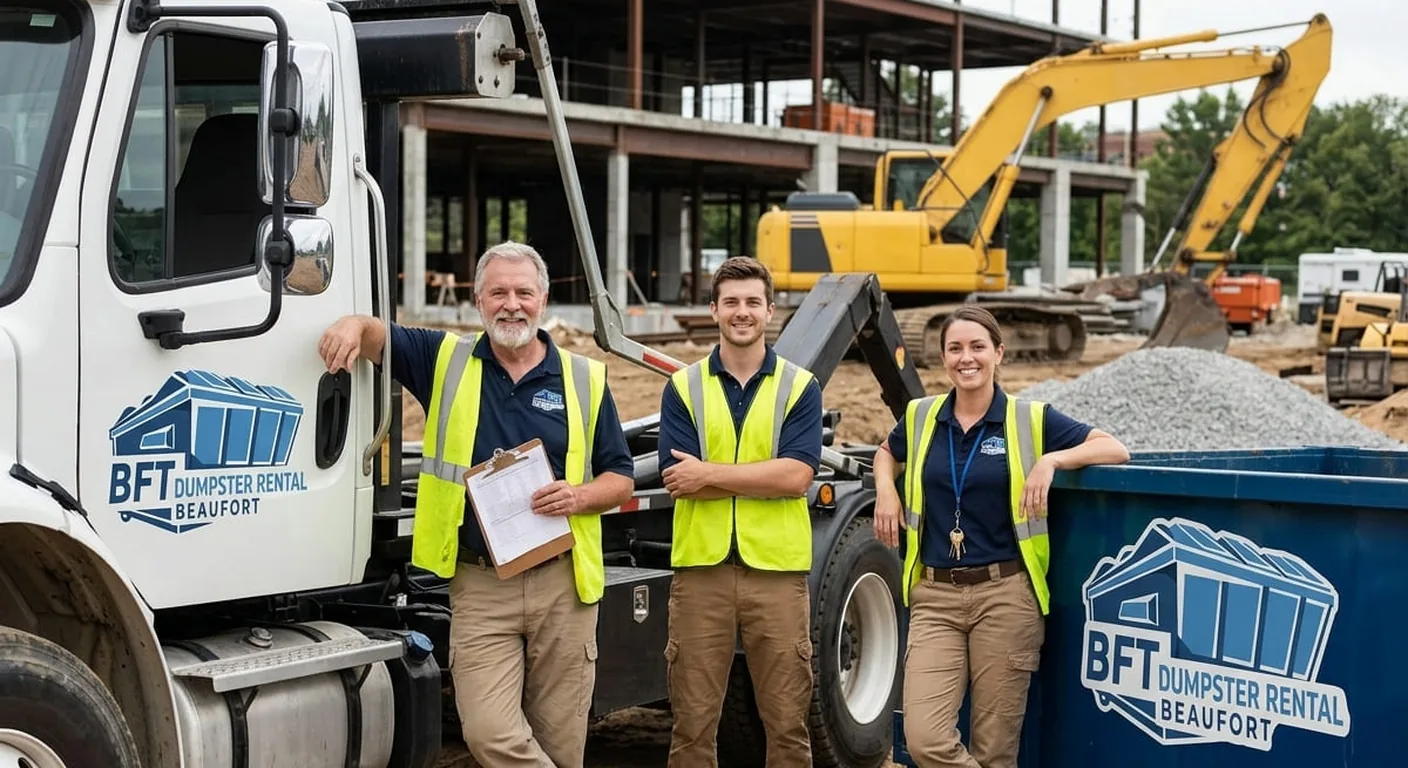
Beaufort County's building boom hasn't slowed down. From new subdivisions rising off the causeways around Lady's Island to the fast-growing corridor stretching through Okatie toward Bluffton, general contractors, framers, remodelers and site supers are juggling more active addresses than ever. Every one of those addresses generates debris — framing offcuts, drywall scrap, packaging, shingles, old cabinetry, torn-out flooring — and every one of them needs it hauled away on a schedule that matches the job, not the other way around. This guide covers how contractors working the Lowcountry's fastest-growing neighborhoods handle construction debris disposal: what belongs in the container, how to size and schedule multiple roll-offs across an active build, and why sandy soil and a high water table change how a dumpster should be placed on a Beaufort-area lot.
The Lady's Island, Okatie and Bluffton Growth Corridor
Beaufort County sits on Port Royal Island between the Beaufort River and Battery Creek, but the newest residential growth is happening a bit further out — the corridor that runs from Lady's Island south through the Okatie area toward Bluffton and Hilton Head. New subdivisions, spec homes, custom builds and multi-phase renovation projects are common along this stretch, and the pace of permitting has made it routine for a single contractor or subcontractor crew to have two or three active job sites going at once within a few miles of each other.
That density is actually an advantage for debris management, if you plan for it. Instead of treating each address as an isolated dumpster order, contractors working this corridor do better when they think in terms of a rolling schedule: containers delivered ahead of a framing package, swapped as drywall and finish work generate their own waste stream, and picked up as each phase closes out. We deliver throughout Lady's Island and Bluffton regularly enough that we can usually coordinate drop times around a framing crew's or drywall sub's actual arrival, not just a generic delivery window.
What Counts as Construction Debris — And What Doesn't
New-construction and renovation sites generate a fairly predictable debris stream: dimensional lumber and framing offcuts, OSB and plywood scrap, drywall cuttoffs, tile and flooring remnants, packaging and pallet material, old cabinetry and fixtures pulled during a renovation, and asphalt shingles from a tear-off. All of that is standard construction debris and goes straight into a roll-off.
What doesn't belong: paint and solvents, oils, tires, batteries, hazardous chemicals, propane tanks or gas cylinders, and medical waste. These materials require separate handling regardless of how a job site is set up, and keeping them out of the roll-off avoids delays at disposal. If a job involves a full teardown rather than a renovation, that's a different debris profile — see our demolition debris page — and a roofing tear-off specifically has its own sizing logic covered in our roofing tear-off dumpster sizing guide. For a general primer on what's allowed statewide, our what can go in a dumpster in South Carolina article covers the full list.
Heavy Debris Needs Its Own Container
Concrete, brick, block and masonry rubble weigh far more per cubic yard than framing scrap, and mixing them into a general debris container can push a load over its practical weight limit fast. If a job includes foundation work, a driveway tear-out, or masonry demolition, order a dedicated container for that material — our concrete and heavy debris service is built around exactly that separation, and it keeps your general construction container available for the lighter framing and finish waste that a crew generates day to day.
Sizing Dumpsters by Build Phase
A single container size rarely fits an entire build from foundation to final punch list. Debris volume and type change as a job moves through its phases, and matching the container to the phase keeps a crew from either overpaying for capacity they don't need or running out of room mid-week. Our construction dumpster rental page has the full lineup; the table below is a general guide for how Beaufort-area contractors typically match size to phase.
| Build Phase | Typical Debris | Recommended Size |
|---|---|---|
| Site prep / demolition of an existing structure | Mixed demo debris, old framing, masonry | 30–40 yard |
| Framing | Lumber offcuts, OSB/plywood scrap, packaging | 20–30 yard |
| Rough-in (electrical, plumbing, HVAC) | Wire, pipe scrap, insulation, packaging | 15–20 yard |
| Drywall and finish carpentry | Drywall cuttoffs, trim scrap, dust and debris | 15–20 yard |
| Flooring, cabinetry, punch list | Flooring remnants, old cabinetry, small fixtures | 10–15 yard |
| Roof tear-off (any phase) | Shingles, underlayment, sheathing scrap | 20–30 yard |
These are starting points, not fixed rules — a large custom build on a Lady's Island lot generates more framing waste than a small infill renovation near downtown, and a full gut renovation can front-load demolition-scale debris before finish work even starts. Our dumpster size guide breaks each size down in more detail, and calling ahead of a bid lets us size the first container correctly instead of guessing.
Multi-Container Scheduling for Active Job Sites
Contractors running multiple lots at once in the Okatie-to-Bluffton corridor, or a single large custom build with several trades on-site simultaneously, usually need more than a one-time drop-and-pickup. A few scheduling patterns work well:
Phased Swap-Outs
Rather than ordering the biggest container available and hoping it lasts the whole job, many builders order a mid-size container and schedule a swap once it's full — pickup of the loaded box and drop-off of an empty one, often on the same visit. This keeps a job site from having a half-full dumpster sitting idle for weeks, or a full one blocking deliveries while it waits on a pickup slot.
Standing Orders Across Multiple Addresses
For contractors and builders running several active sites in the same subdivision or the same general area, we can coordinate a standing schedule — a container delivered to each address as framing starts, and a rotation of pickups and swaps that lines up with each site's actual pace rather than a single fixed date. This is especially useful across the Lady's Island and Okatie corridor, where several spec homes or a phased subdivision build often move through the same construction stages within a few weeks of each other.
Rental Periods and Extensions
Our standard rental period is 7 days, with extensions available on request — useful for a job that runs longer than expected, or a container that needs to stay on-site through a slower finish-work phase. Flat-rate pricing covers delivery, pickup and disposal with no hidden fees, so a schedule change doesn't turn into a pricing negotiation.
Sandy Soil and High Water Table Placement Considerations
Placement matters more in the Lowcountry than it does in a lot of the country. Much of the ground around Lady's Island, Okatie and the marsh-adjacent lots toward Bluffton sits on sandy soil with a high water table close to the surface, especially on newer subdivision lots cut close to tidal creeks or low-lying wooded areas. A loaded roll-off is heavy, and sandy ground that's been saturated by a recent Lowcountry downpour can shift or rut under that weight in a way that firmer, well-compacted ground won't.
A few placement habits help on these lots:
- Use the driveway or a compacted staging pad where possible. A paved or gravel surface distributes the weight far better than bare sandy soil, especially after rain.
- Avoid low spots and drainage swales. New subdivision lots are often graded with swales to manage runoff toward the marsh or a retention pond — placing a container in one of these, even temporarily, can trap water and soften the ground underneath it.
- Plan for wet-season timing. Coastal Beaufort's rainy stretches and the June–November hurricane season both raise the water table temporarily; if a job's timeline allows it, scheduling a heavy container's delivery for a drier stretch reduces the chance of it settling unevenly.
- Tell us about the site before delivery. If a lot has no driveway yet — common on a fresh building lot before the concrete is poured — let us know so we can plan placement on the most stable available ground rather than guessing on arrival.
None of this is unique to any one subdivision — it's a general Lowcountry condition that applies from Lady's Island out through the Okatie area and toward Bluffton, wherever a lot sits close to marsh, creek, or low-lying ground. Getting placement right the first time avoids a container that has to be repositioned mid-job.
Permits and Right-of-Way Rules
No permit is needed for a container placed entirely on private property — a driveway, a graded lot, or a staged construction pad. If a job site has no room and the container needs to sit on a public street or right-of-way, a temporary permit may be required. Confirm requirements with the City of Beaufort or Beaufort County depending on the job's location, since requirements can differ between the city, unincorporated county land, and towns further down the corridor. Our dumpster permits in Beaufort, SC article walks through the general process.
If a job involves any underground work — footings, utility trenching, a new driveway culvert — call SC811 before digging, regardless of whether it affects dumpster placement. And if a loaded container needs to travel on local roads to reach disposal, standard road-weight and right-of-way rules apply under the South Carolina Department of Transportation. For broader guidance on managing construction and demolition material responsibly, the EPA's construction and demolition materials guidance is a useful reference for larger projects.
Working With BFT on Your Next Build
Contractors who work the Lady's Island, Okatie and Bluffton corridor regularly know that a dumpster schedule that doesn't match the job's pace becomes its own kind of delay — a full container blocking a delivery truck, or an empty one taking up space a crew needs for staging. We drop off, we swap, and we pick up on a schedule built around your actual job site, not a generic calendar. Call (854) 212-5294 to set up a container for your next framing package, or to coordinate a multi-container schedule across several active addresses — we'll size the first drop and work out the rotation from there.
Browse our full services lineup or check our size guide before you call, or just get in touch and we'll help you figure out what a given phase needs.
Need a container in Beaufort or anywhere in Beaufort County? Call (854) 212-5294 and describe the job. We will name the size, the flat rate and a delivery slot — often the same day. No forms, no waiting on an email.