
Renovation
Historic Home Renovation Debris Disposal
Gutting a tabby, heart pine or plaster-and-lath home in downtown Beaufort? Learn how to size, place and load a dumpster for historic renovation debris the right way.
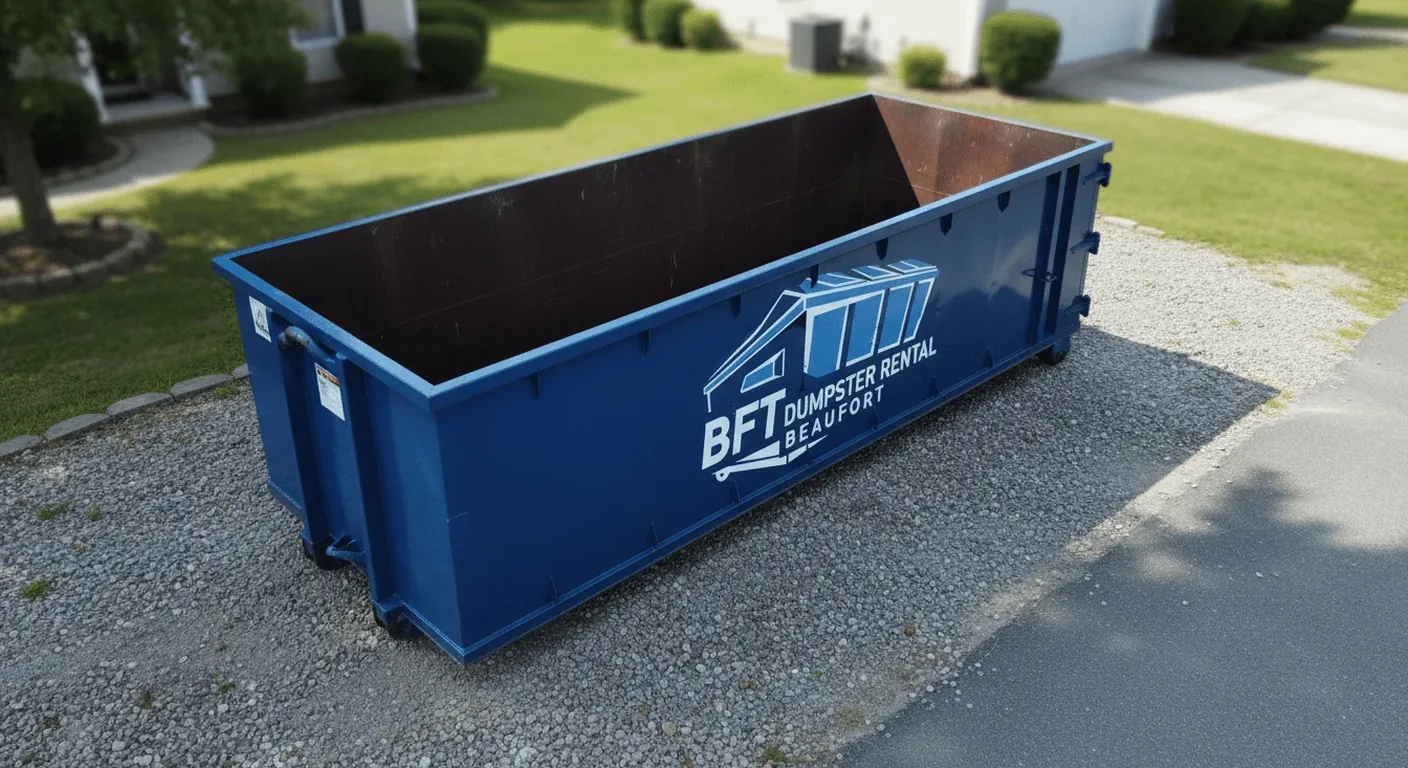
Renovating a home in downtown Beaufort is not the same job as gutting a 1990s subdivision house on Lady's Island. Behind those wraparound porches and raised-pier foundations sits a different set of building materials entirely — tabby and brick, old-growth heart pine, and true plaster-and-lath walls instead of drywall. That difference matters the moment you start filling a dumpster, because historic demolition debris is heavier, bulkier and often more awkward to place than a typical remodel. Here's what to know before the sledgehammers come out.
Beaufort's Historic Building Stock Is a Different Animal
The Beaufort Historic District is one of the best-preserved in the South, and the homes in it were built for a hot, humid, flood-prone coastal climate long before air conditioning or modern framing existed. That shows up in the materials:
- Tabby and brick foundations and walls — tabby, the oyster-shell-and-lime concrete the Lowcountry is known for, was poured thick and cures nearly as hard as stone. Removing or repairing it produces dense, chunky masonry debris, not the light rubble you get from modern concrete board.
- Heart pine flooring and framing — old-growth heart pine is dense, resin-heavy, and was often milled in long, thick boards. A pallet's worth of salvaged heart pine flooring weighs far more than the same footprint of modern engineered flooring.
- Plaster-and-lath walls — instead of a single layer of drywall, many downtown homes have wood lath strips nailed to the studs with several coats of hand-troweled plaster on top. It comes down in heavy, jagged slabs, and the lath strips (often full of old nails) tag along with it.
- Raised-pier foundations and wraparound porches — built to let floodwater and storm surge pass underneath and to keep living space cooler, these homes often have narrow crawlspace access, tall porch stairs, and delicate original railings and columns that a work crew has to protect while carrying debris out to the street or driveway.
Why This Debris Weighs More Than a Modern Remodel
The single biggest mistake on a historic renovation is sizing the dumpster the way you would for a typical drywall-and-carpet remodel. Volume isn't the only thing that matters — weight is, and plaster-and-lath debris is dramatically heavier, pound for pound, than the same wall area in drywall. A room's worth of plaster and lath can fill a dumpster's weight allowance long before it fills the box itself. Old heart pine flooring and framing lumber adds the same problem: it's dense wood that was often cut old-growth, so it doesn't compare to modern dimensional lumber. Tabby, brick and mortar debris from foundation or chimney work is heavier still.
Match the Dumpster to the Weight, Not Just the Box Size
Because of this, a historic gut job often needs either a bigger box or more than one pull than a similarly sized modern remodel would. Our roll-off dumpster rental and construction dumpster rental services cover the full range from a 10 yard for a single-room plaster demo up to a 30 or 40 yard for a whole-house gut renovation — see our full dumpster size guide for details on each. When you call, tell us specifically that you're removing plaster and lath, heart pine, or tabby/masonry, not just "renovation debris" — it changes which size and how many pulls make sense, and it's the kind of detail that's easy to miss until the truck is already half full.
| Size | Best for | Historic material notes |
|---|---|---|
| 10 yard | Single-room plaster or lath demo, small bathroom gut | Fills on weight fast if it's mostly plaster — don't overestimate capacity |
| 15 yard | Kitchen or multi-room interior demo | Good for mixed plaster, trim and old flooring together |
| 20 yard | Larger interior renovation, porch rebuild debris | Common choice for lath-and-plaster whole-floor jobs |
| 30 yard | Whole-house gut, foundation or chimney work | Handles bulkier tabby/brick and heart pine framing loads |
| 40 yard | Full historic restoration, major structural rebuild | Best when both masonry and old lumber debris are involved |
Placement Matters More on Narrow Historic Streets
Downtown Beaufort's streets were laid out for horses and carriages, not modern roll-off trucks. Many lots have short or nonexistent driveways, tight on-street parking, and lanes barely wide enough for two cars to pass. Before delivery day, walk your property and think through:
- Driveway vs. street placement — a driveway is almost always the easier, faster option and avoids street-permit questions entirely. If your historic lot doesn't have room, on-street placement is usually possible but needs a bit more planning.
- Turning radius — some historic-district streets and alleys are too tight for a full-size roll-off truck to maneuver comfortably. Tell us the street name and any narrow approach when you book so we can plan the drop correctly the first time.
- Low-hanging branches and porch overhangs — wraparound porches, second-story galleries and mature landscaping can all sit closer to the street than they look from the sidewalk. A quick look up before delivery saves scraped gutters and porch trim.
Protecting Live Oaks and Root Systems
The live oaks that shade Beaufort's historic streets are as much a part of the neighborhood's character as the houses themselves, and their root systems often run shallow and wide, well past the edge of the canopy. A loaded roll-off dumpster is heavy, and repeatedly parking or dropping one directly over exposed roots can compact the soil and stress a tree that's been growing for well over a century. Where possible, we place the dumpster on paved driveway or street surface rather than on grass or bare ground near a trunk, and we're glad to talk through placement options with you in advance if there's a live oak close to the work area.
Crawlspace and Under-Porch Debris: The Extra Step
Raised-pier construction was smart engineering for a flood-prone barrier island climate, but it adds a step that a slab-on-grade remodel never deals with. Old insulation, collapsed ductwork, rotted sill plates and decades of stored junk under a raised historic home usually have to be hand-carried out through a crawlspace access door or up through the house itself, then across the yard to the dumpster. That's slower and more labor-intensive than a garage-level demo, so building in extra time — and extra hands — for under-house work keeps the rest of the schedule from backing up.
Sandy Soil and High Water Tables
Much of the Lowcountry sits on sandy soil with a high water table, and a loaded dumpster is heavy enough to sink or rut a soft, damp yard the same way a delivery truck can. On tighter historic lots where the only open ground is grass or a shell driveway rather than pavement, we'll talk through placement with you ahead of time so the box sits somewhere stable for the full rental period, not just on delivery day.
Permits for Street Placement in the Historic District
Dropping a dumpster on your own driveway or private property doesn't require a permit. Placing one on a public street or right-of-way in Beaufort's historic district, however, may require a temporary placement permit, and the historic district can carry its own rules on top of the standard citywide process. Check with the City of Beaufort before your renovation starts if the dumpster will sit on the street even for a few days, and confirm with Beaufort County as well if your property is just outside city limits. Our full dumpster permit guide for Beaufort, SC walks through the process in more detail, and our team can usually tell you right away, based on your address, whether street placement is likely to need one.
What's Worth Salvaging Before It Goes in the Dumpster
Not everything that comes out of a historic gut job belongs in the dumpster. Original heart pine flooring, mantels, doors, hardware and millwork are often worth pulling and setting aside before demo begins, even if the plan is to refinish rather than reuse them on-site — salvage buyers and restoration-minded neighbors in Beaufort are always looking for genuine old-growth material. The same goes for salvageable brick or tabby that comes out clean during foundation repair. Sorting this out before the crew starts swinging keeps good material out of the debris stream and keeps your dumpster space for what actually needs to be hauled away.
What Can (and Can't) Go In the Dumpster
Once the salvage is set aside, plaster, lath, old flooring, trim, drywall, damaged framing lumber, roofing material and general demolition debris can all go in the dumpster. Paint, solvents, oils, batteries, propane tanks or gas cylinders, tires and any hazardous chemicals cannot — even old paint cans found during a historic demo need to be handled separately. If you're unsure whether something from an older home counts as hazardous, ask us before it goes in the box. For general background on responsible construction and demolition material handling, the EPA's construction and demolition materials guidance is a useful reference, and our own guide to what can go in a dumpster in South Carolina covers the full accepted and prohibited list.
Timing a Multi-Week Renovation Around Hurricane Season
Historic restorations rarely wrap in a week, and Beaufort's Atlantic hurricane season runs June through November — a big overlap with most renovation timelines. A dumpster sitting in a driveway or on the street for weeks at a time is something to think about when a tropical storm watch goes up: keep loose debris like lath, shingle scraps and light trim from piling above the rim where wind can catch it, and if a storm is approaching with real force behind it, ask us about scheduling a pickup or a temporary hold rather than leaving a fully loaded container out through the worst of it. Planning pulls around the calendar, rather than letting a box sit untouched for a month, also keeps a long historic job from turning into a storm-prep headache on top of everything else.
Working With BFT on Your Historic Renovation
Every historic property in downtown Beaufort is a little different — the lot size, the street width, the tree cover and the mix of tabby, heart pine and plaster all vary from block to block. When you call (854) 212-5294, tell us what you're removing and where the property sits, and we'll help you pick a size and placement that actually fits the job instead of guessing. We deliver, we drop off exactly where it works for your site, and we pick up and haul away once you're loaded, with one flat rate covering delivery, pickup and disposal. Whether you're doing a single-room plaster demo or a full down-to-the-studs restoration, we've sized jobs like this all over the historic district and the surrounding Lowcountry.
Planning the rest of the project? Our size guide for choosing the right dumpster and construction debris disposal guide cover the basics for any renovation, and our residential dumpster rental page has more on what to expect for a home project start to finish. When you're ready to book, contact us or call (854) 212-5294 and we'll walk through your site with you.
Need a container in Beaufort or anywhere in Beaufort County? Call (854) 212-5294 and describe the job. We will name the size, the flat rate and a delivery slot — often the same day. No forms, no waiting on an email.